Search for Plants

Search for a specific plant or use the search filters below to identify plants. The list of plants will change as you make selections. As you select more filters your list will narrow. View the tutorial video if you are unsure how to search.

Find a Specific Plant

To search for a specific plant, enter common name or scientific name below.

Select a Region

New Jersey is divided into four main physiographic regions based on differences in relief, landforms, and geology – Ridge and Valley, Highlands, Piedmont, and Coastal Plain. The boundary between each region is determined by a major change in topography and geology. For more information see New Jersey’s physiographic regions

Select one of these options if you live in one of these ecoregions. Leave unchecked if you are not sure.

Select yes if you wish to narrow your list to New Jersey native plants only. Learn more.

Select based on whether you have a problem with deer in your yard. Learn more.

Select if you would like plants that attract birds or pollinators like bees, butterflies and other beneficial insects. Link for more info.

Make selection based the amount of sunlight or shade in the area you'd like to plant. Learn more.

If you know your soil type, make the appropriate selection. Learn more about soil types.

If you know your soil pH, make a selection. If you are uncertain, consider getting a soil test.

Learn more.

Select based on whether your soil is wet most of the time, periodically wet or moist (medium-drained), or dry most of the time (well-drained). Learn more.

Make selections based on whether your planting areas are dry most of the time (including extended periods during which there is little or no rain) or if your planting areas have access to irrigation. Learn more.

If your property is in a coastal area and subject to salt spray or salt water (or if you’re planting along roadways frequently exposed to winter de-icing products), consider plants with high to medium salt tolerance. Learn more.

Plants

photo of Salvia spp.
register or login to use the plant listPlease register or login to build your personal plant list.

Salvia spp.

register or login to use the plant listPlease register or login to build your personal plant list.

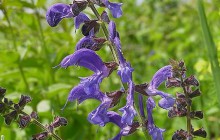
Sage

Salvia,or Sage, is a large genus offering many species in various sizes and colors. Sage is a wildlife-friendly plant, which is very attractive to...

photo of Salix nigra
register or login to use the plant listPlease register or login to build your personal plant list.

Salix nigra

register or login to use the plant listPlease register or login to build your personal plant list.

Black Willow

Black Willow is a fast-growing, flowering tree. Yellow-green flowers bloom April-May, providing a nectar source for native bees, honeybees,...

photo of Saccharum giganteum
register or login to use the plant listPlease register or login to build your personal plant list.

Saccharum giganteum

register or login to use the plant listPlease register or login to build your personal plant list.

Sugarcane Plumegrass, Giant Plumegrass

Sugarcane Plumegrass is a showy, tall grass, which grows best in wet areas in full sun. Clusters of coppery-rose flowers bloom in October, followed...

photo of Saccharum brevibarbe var. contorum
register or login to use the plant listPlease register or login to build your personal plant list.

Saccharum brevibarbe var. contortum

register or login to use the plant listPlease register or login to build your personal plant list.

Shortbeard Plumegrass, Bent-awn Plumegrass

Shortbeard Plumegrass is a tall, clumping grass. Whitish-yellow flower plumes bloom July-October. Fall color is an attractive bronze. This southern...

photo of Rudbeckia hirta
register or login to use the plant listPlease register or login to build your personal plant list.

Rudbeckia hirta

register or login to use the plant listPlease register or login to build your personal plant list.

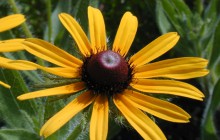
Blackeyed Susan

Blackeyed Susan features daisy-like flowers with bright yellow-orange rays and brown center disks. The long bloom time lasts from June-September....

photo of Rudbeckia fulgida
register or login to use the plant listPlease register or login to build your personal plant list.

Rudbeckia fulgida

register or login to use the plant listPlease register or login to build your personal plant list.

Orange Coneflower

Orange Coneflower features daisy-like flowers with bright yellow-orange rays and brown-purple center disks. The long bloom time lasts from...

photo of Rosa virginiana
register or login to use the plant listPlease register or login to build your personal plant list.

Rosa virginiana

register or login to use the plant listPlease register or login to build your personal plant list.

Virginia Rose

Virginia Rose features pink flowers which bloom June-August. This plant provides a nectar source and nesting material for native bees and honeybees....

photo of Rhus glabra
register or login to use the plant listPlease register or login to build your personal plant list.

Rhus glabra

register or login to use the plant listPlease register or login to build your personal plant list.

Smooth Sumac

Smooth Sumac features yellowish-green flowers which bloom June-July. it is dioecious, with male and female flowers on separate plants. Both male and...

photo of Rhus copallinum
register or login to use the plant listPlease register or login to build your personal plant list.

Rhus copallinum

register or login to use the plant listPlease register or login to build your personal plant list.

Winged Sumac, Flameleaf Sumac

Winged Sumac features yellowish-green flowers blooming July-August. It is dioecious, with male and female flowers on separate plants. Both male and...

photo of Rhus aromatica
register or login to use the plant listPlease register or login to build your personal plant list.

Rhus aromatica

register or login to use the plant listPlease register or login to build your personal plant list.

Fragrant Sumac

Fragrant Sumac features yellow flowers, which bloom March-April. It is monoecious; male and female flowers appear separately on the same plant....